5 LockedIn AI Alternatives in 2026 (Honest Comparison + Who Should Use Each)
Looking for a LockedIn AI alternative? We compared 5 real options on price, features, and risk — including AceRound AI, Cluely, and Final Round AI.
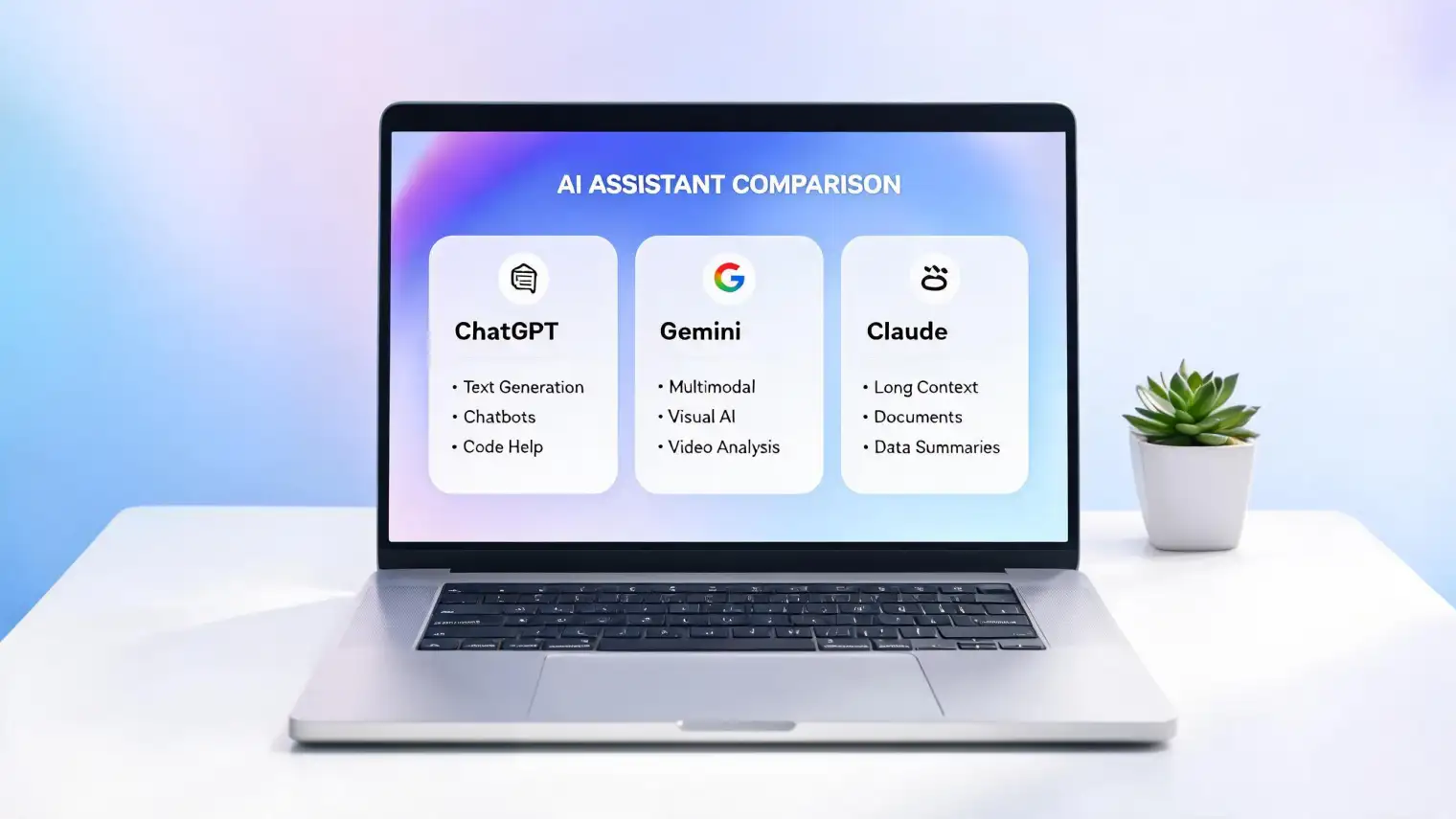
TL;DR: LockedIn AI alternative tools range from preparation-focused platforms to aggressive real-time copilots. If LockedIn AI isn't working for you — because of its $50–70/month price, generic outputs, or subscription cancellation headaches — the best alternative depends on whether you want to win interviews through better preparation or through live AI assistance. This breakdown covers 5 real options with honest trade-offs.
Let's skip the suspense: LockedIn AI is not a scam. It actually works for some candidates. But at $49.99–$69.99/month, with a 3.6/5 average on Trustpilot and a reputation for difficult subscription cancellations, a lot of people end up searching for something better.
Here's what that search actually looks like: some users want a cheaper version of the same real-time assist experience. Others got burned by AI-generated answers that were too generic to sound human. A third group — and this is the quietest but largest segment — started questioning whether feeding an AI into a live interview is the approach they actually want to take.
This comparison addresses all three scenarios.
What LockedIn AI Does (And Why People Leave)
LockedIn AI positions itself as a real-time interview copilot. During a live interview, it listens to both the interviewer's questions and your responses, then surfaces AI-generated answer suggestions in real time — structured around the STAR method. It includes a browser extension for standard Zoom/Teams calls and a stealth desktop app designed to stay hidden during screen sharing.
Features: real-time answer suggestions, STAR-format structuring, mock interview mode, resume optimization, 40+ language support, VSCode integration for coding interviews.
Pricing: $35–$70/month on credit plans, $49.99–$69.99/month for unlimited, $1,499 lifetime deal. No meaningful free tier.
Why people look for alternatives:
- Cost: $70/month is expensive for a tool you use only during interviews. Most people have at most a handful of serious interviews per month.
- Generic answers: The AI suggestions are often surface-level STAR templates that don't incorporate your actual experience. Interviewers notice when your answer sounds like it was written by a machine.
- Cancellation issues: Trustpilot is full of complaints about unexpected charges and difficulty reaching support to cancel.
- Detection risk: The stealth mode is less invisible than advertised — the desktop overlay has been reported to appear in screenshots and during screen sharing handoffs. Undetectable AI interview assistant covers what detection actually looks like in practice.
- The dependency problem: Real-time AI assistance can become a crutch. When the AI suggestion doesn't fit the question, candidates who've relied on it freeze.
The 5 Best LockedIn AI Alternatives in 2026
1. AceRound AI — Best for Preparation-Focused Candidates
AceRound AI (aceround.app) takes a different philosophy from LockedIn AI: rather than AI-in-the-ear during the interview itself, it's built for structured preparation beforehand combined with real-time support for candidates who want that option.
The preparation mode uses your target job description and your actual experience to generate personalized mock interview scenarios. You practice answer delivery, get AI feedback on your structure and specificity, and iterate until the content is genuinely internalized — not just prompted.
Where AceRound has a clear edge: Behavioral interviews, where the problem with generic AI responses is most acute. An answer about "a time you showed leadership" that incorporates your specific project, team, and outcome is always stronger than a STAR-formatted template. AceRound's preparation workflow builds answers rooted in your real experience.
Pricing: Significantly more accessible than LockedIn AI's $70/month, with flexible options and a free trial.
Honest trade-off: If you specifically want real-time suggestions whispered to you during a live interview, AceRound's primary value is in the preparation phase. Some users want both; AceRound delivers stronger preparation.
2. Cluely — Best for Real-Time Aggressive Assist
Cluely went viral in early 2025 for being genuinely invisible to screen sharing — its overlay doesn't appear in captured frames. If LockedIn AI's stealth mode failures were your dealbreaker, Cluely is the more technically advanced real-time option.
Cluely alternative covers this in more depth, but the short version: Cluely uses OS-level rendering tricks to stay off-screen during captures. It works. The trade-offs are cost (similar to LockedIn AI's pricing tier) and the ethical reality that you're in a genuinely gray zone regarding most companies' interview policies.
Best for: Candidates who've made the informed decision to use real-time AI assistance and want the most technically reliable version.
Not ideal for: Users who want sustainable interview skills or who are applying to companies where detection would be career-ending.
3. Final Round AI — Best Comprehensive Feature Set
Final Round AI is the closest feature parity competitor to LockedIn AI. It offers real-time coaching, mock interviews, resume optimization, and a browser-based copilot with screen sharing compatibility. The UI is more polished than LockedIn AI's, and the onboarding is better documented.
AceRound vs Final Round AI breaks down the detailed comparison, but the headline differences are: Final Round AI has a larger feature surface, while AceRound AI offers more personalized answer quality and better behavioral interview preparation.
Best for: Users who specifically want LockedIn AI's feature set but with a more stable platform and better support.
Pricing: Comparable to LockedIn AI, with more transparent cancellation.
4. Interview Coder — Best for Technical Interviews
If your specific pain point is coding assessments rather than behavioral or conversational interviews, Interview Coder is purpose-built for that scenario. It works within coding environments and surfaces relevant algorithm hints and code solutions in real time.
Interview Coder alternative covers where it fits and where it doesn't. The short answer: it's laser-focused on Leetcode-style technical screens, not the behavioral or fit questions that make up the first 30 minutes of most interviews.
Best for: Software engineers whose primary interview bottleneck is algorithmic coding rounds.
Not ideal for: Anyone whose interviews include significant behavioral, system design, or leadership questions.
5. WiseWhisper — Best Budget Option
WiseWhisper is the budget-tier real-time alternative, pricing around $29/month. It's a functional browser-based copilot that provides real-time suggestions without the feature bloat of LockedIn AI or Cluely. The AI quality is noticeably lower — answers are more generic, STAR structuring is less consistent — but for candidates who just want basic question echoing and prompts, it covers the essentials.
Best for: Budget-constrained candidates who want to try real-time AI assist without committing to $70/month.
Trade-off: Lower AI quality shows in the output. Fine for warm-up mock interviews; less reliable in a high-stakes real interview.
AceRound AI vs LockedIn AI: Detailed Comparison
| AceRound AI | LockedIn AI | |
|---|---|---|
| Primary approach | Preparation + optional real-time | Real-time first |
| Pricing | Flexible, accessible tiers | $49.99–$69.99/month |
| Behavioral interviews | Personalized, experience-based | Generic STAR templates |
| Technical interviews | Practice-focused | VSCode + live coding assist |
| Cancellation | Standard subscription management | Documented complaints |
| Detection risk | Low (preparation phase) | Moderate (stealth app reports) |
| Languages | Multiple | 40+ languages |
| Free trial | Yes | Limited |
The core philosophical difference: LockedIn AI assumes you need AI assistance in the room with you. AceRound AI assumes that the best interview performance comes from being genuinely prepared — and that AI can supercharge that preparation far more reliably than it can improvise good answers on your behalf in real time.
Both beliefs can be valid depending on context. A candidate with a lot of content but poor structure benefits from real-time STAR prompting. A candidate who isn't yet confident in their substance benefits more from intensive preparation.
How to Choose: A Decision Framework
Choose AceRound AI if:
- Your interviews include significant behavioral/leadership questions
- You want answers that sound like you wrote them
- You're interviewing at companies where detection would matter
- You want to actually improve your interview performance over time
Choose Cluely if:
- You've committed to real-time AI assist and want the best technical invisibility
- You've already tried LockedIn AI and the detection or quality issue was your dealbreaker
Choose Final Round AI if:
- You want LockedIn AI's feature set with better UX and support
Choose Interview Coder if:
- Technical coding rounds are your specific bottleneck
Choose WiseWhisper if:
- You want to try real-time AI assist on a budget before committing
Skip all of these and just practice if:
- You have more than 3 weeks before your target interview
- Your bottleneck is anxiety, not knowledge
- You're interviewing at a company that does thorough background checks or reference calls alongside interviews (the gap between an AI-assisted interview and an unaided one eventually shows)
The Honest Version of the AI Interview Debate
22% of job seekers now use AI during live interviews, according to Newsweek research. That number is rising. Most companies don't have explicit written policies against it — but most interviewers have a strong implicit expectation that you're answering with your own reasoning.
The gray zone is real. Using AI to prepare is universally accepted. Using AI to practice your delivery is accepted. Using AI to suggest answers in a live interview sits in a different category — one where the consequences of detection range from "zero follow-up" to "blacklisted at this company."
The candidates who use real-time AI most effectively are those who use it as a structural prompt they quickly adapt, not a verbatim script they read. The ones who get caught are those who deliver word-for-word AI output with the timing delays of someone reading.
The preparation approach works because internalized knowledge performs. If you've rehearsed an answer enough times that it sounds natural, it will sound better than an AI-generated one you're reading for the first time in a live interview. Try AceRound AI free at aceround.app and run 5 mock interviews before deciding whether you need a real-time tool at all.
FAQ: LockedIn AI Alternatives
Is LockedIn AI worth the cost? For $50–70/month, it's hard to justify unless you're actively interviewing at multiple companies simultaneously. The AI output quality doesn't justify premium pricing for occasional use. Most users find better ROI in preparation tools.
Can interviewers detect LockedIn AI stealth mode? The stealth mode is imperfect. Multiple users report the desktop overlay appearing in screenshots and during screen share session handoffs. It's more robust than a regular browser extension, but "undetectable" is marketing language, not a technical guarantee.
Does LockedIn AI actually help you get hired? The honest answer: it helps some candidates manage anxiety and remember to structure answers. Whether that translates to job offers depends entirely on whether the AI suggestions are good for the specific question and whether you can adapt them naturally. A well-prepared candidate will outperform an AI-assisted unprepared candidate in most real-world scenarios.
How do I cancel my LockedIn AI subscription? Through your account dashboard under subscription settings. If you're having difficulty, email their support directly — but based on Trustpilot reviews, plan for this to take multiple attempts. Consider disputing charges with your bank if cancellation isn't honored within 5 business days.
Is using AI during interviews allowed? Most companies don't have explicit written policies, but the implicit expectation is that you're answering with your own reasoning. Detection methods are improving. The safe framing: use AI to prepare, not to narrate. Is using AI in interviews cheating? covers the ethical landscape in full.
What's the difference between LockedIn AI and Final Round AI? Feature sets are similar. Final Round AI has a slightly better UI and more documented customer support. LockedIn AI has VSCode integration that Final Round doesn't match. Pricing is comparable. The choice between them largely comes down to which onboarding experience you prefer.
Author · Alex Chen. Career consultant and former tech recruiter. Spent 5 years on the hiring side before switching to help candidates instead. Writes about real interview dynamics, not textbook advice.
Related Articles
Does Harver Detect Cheating? What Its Proctoring Actually Checks
Does Harver detect cheating on its pre-employment assessments? A candidate look at Harver's Proctoring add-on, what gets logged after a flag, and what happens next.
Micro1's Zara AI Interview: What It Actually Tests (And Why Timing Gets Flagged)
Micro1's AI interviewer Zara has run 300,000+ interviews for remote roles. Here's why it flags response latency as a cheating signal, and what that means for AI prep.
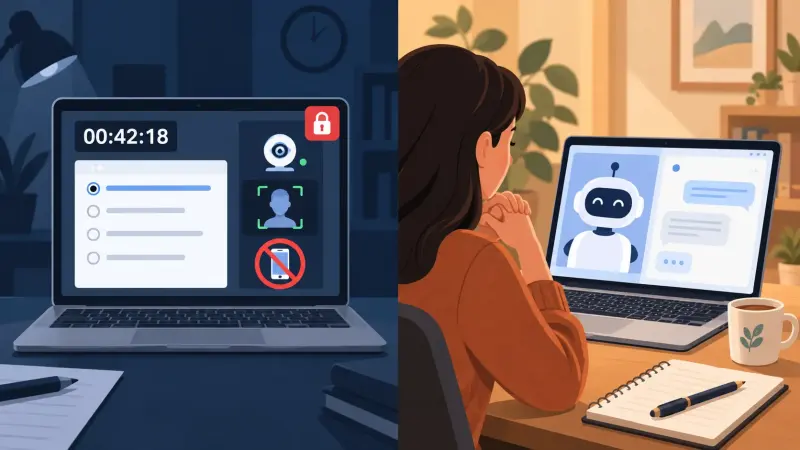
Does CoCubes Detect Cheating During the Online Assessment?
CoCubes (an Aon platform) proctors off-campus drives with real AI monitoring — what it actually watches, what candidates report, and where prep helps.